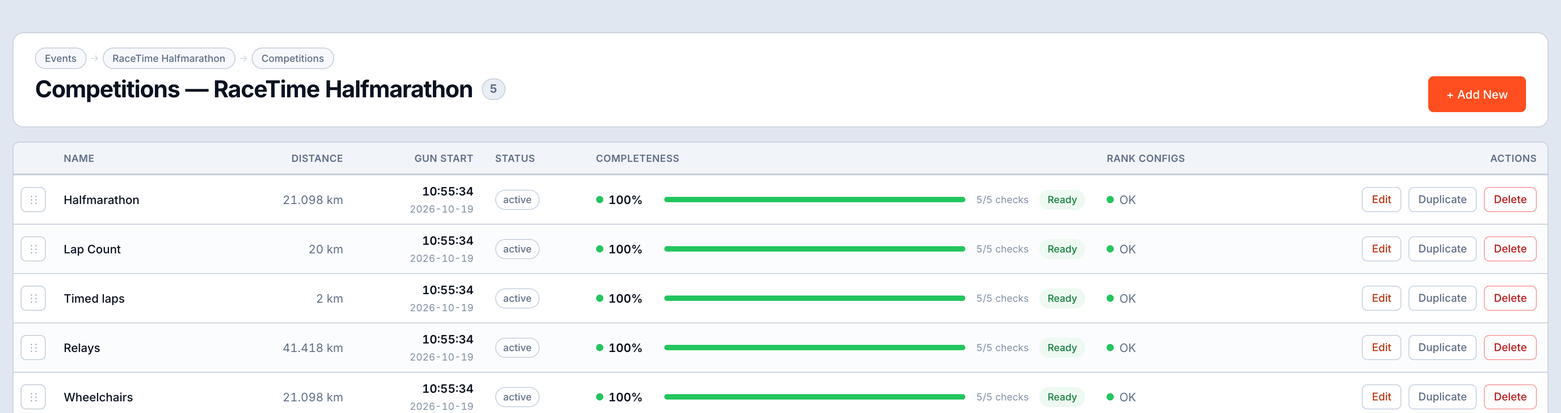
From a point-to-point road race to multi-lap running and cycling circuits; from a single-discipline run to a full triathlon, duathlon or aquathlon; right through to station-based fitness racing. One engine separates a competition's sport, course shape, scoring rule and public layout - so every format shares the same pipeline instead of becoming bespoke code.
This is what sets RaceTime apart: you're not locked into running, or into one course shape. Configure the format and the scoring, rankings and public layout follow automatically.
Classic start-to-finish races, running or cycling, scored on fastest time - from a local 5K to a mass-participation marathon.
Running or cycling circuits - fixed-lap (fastest to finish the laps) or timed-lap (most distance in the time), with manual partial-distance support.
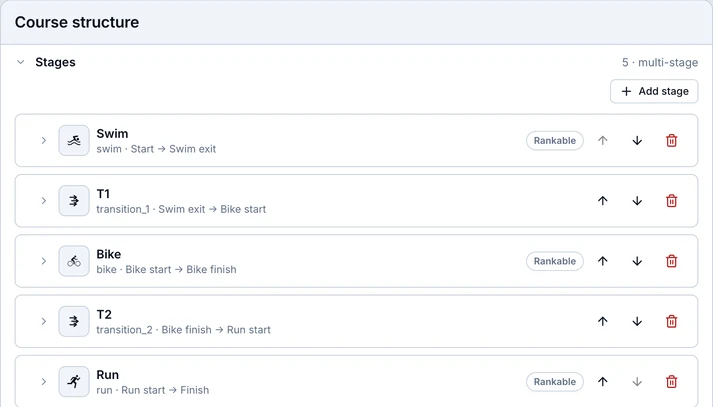
From a single-discipline run to triathlon, duathlon, aquathlon and beyond - swim, bike and run legs with transitions, staged and scored as one.
Station-based racing - alternating runs and workout boxes - scored on total time across the whole sequence.
Split a competition into waves, each with its own gun time. Every participant is automatically scored against their own wave's start - not the single competition gun - so corral starts and mass-participation road races read fairly without any manual time maths.
Multi-stage events run as an ordered set of stages with per-stage timing and transitions in between. Build the course once - choose the stages, set their order, give each stage its own rules - and the engine assembles the overall result and the stage breakdowns automatically.
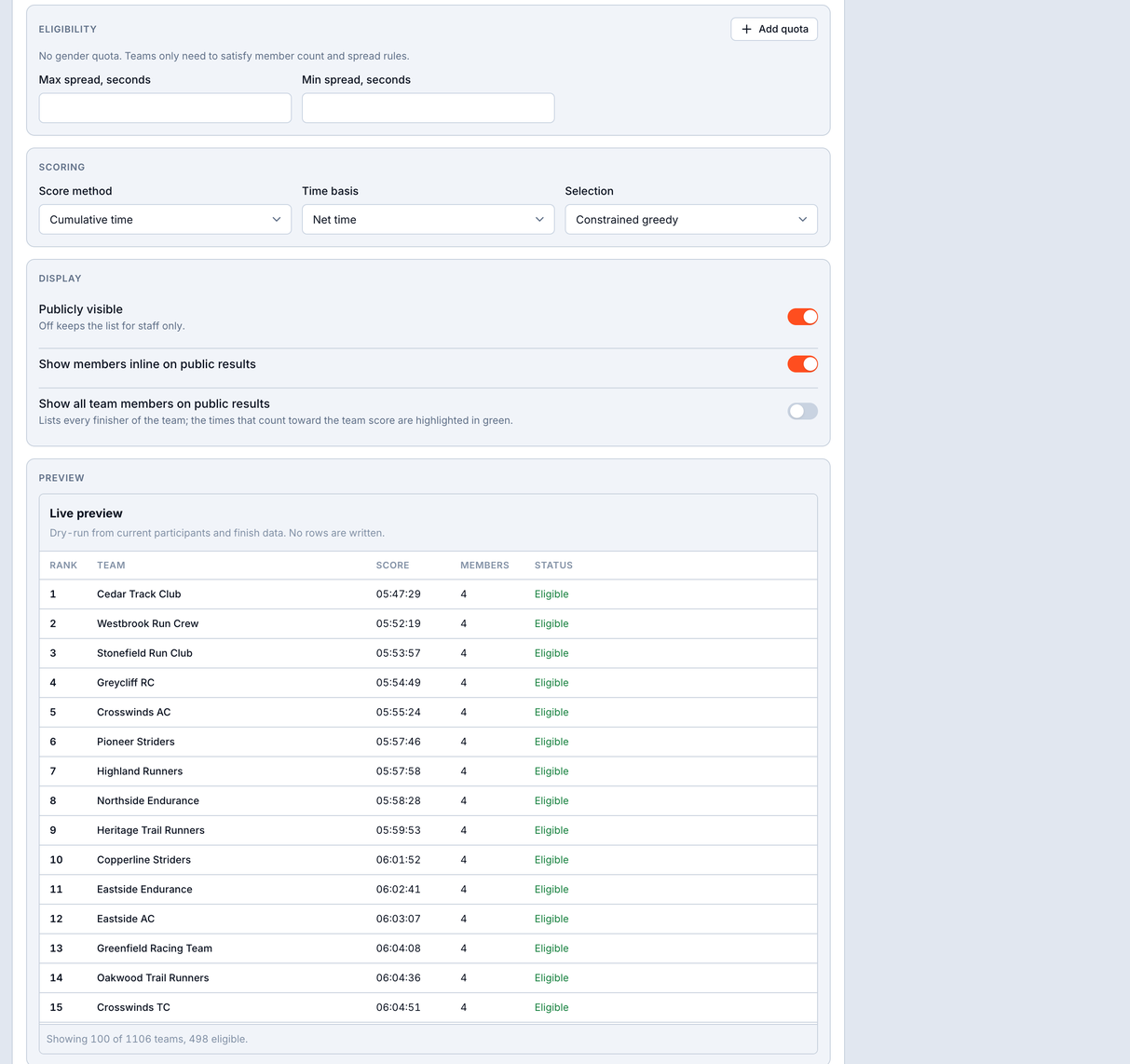
Relays and team competitions roll individual results up into a team standing - pick the scoring rule that matches the format and let participants be assigned to teams automatically.
Lap races come in two shapes, and each one wins differently. RaceTime reads the lap data either way and renders lap-specific public result lists and profile sections, so the standing always reflects the rule that actually applies.
Functional Fitness events run as an ordered sequence of runs and workout stations. Total time is the sum of the station times, and the public layout shows each participant's progress station by station - purpose-built for the format, on the same pipeline as everything else.
An ordered sequence of runs and workout stations, set up in the order participants tackle them - the engine knows what comes next.
Total time is the sum of every station time, so the overall standing reflects the whole sequence rather than a single split.
A public layout built for the format - spectators follow each participant's progress through the stations as the competition unfolds.
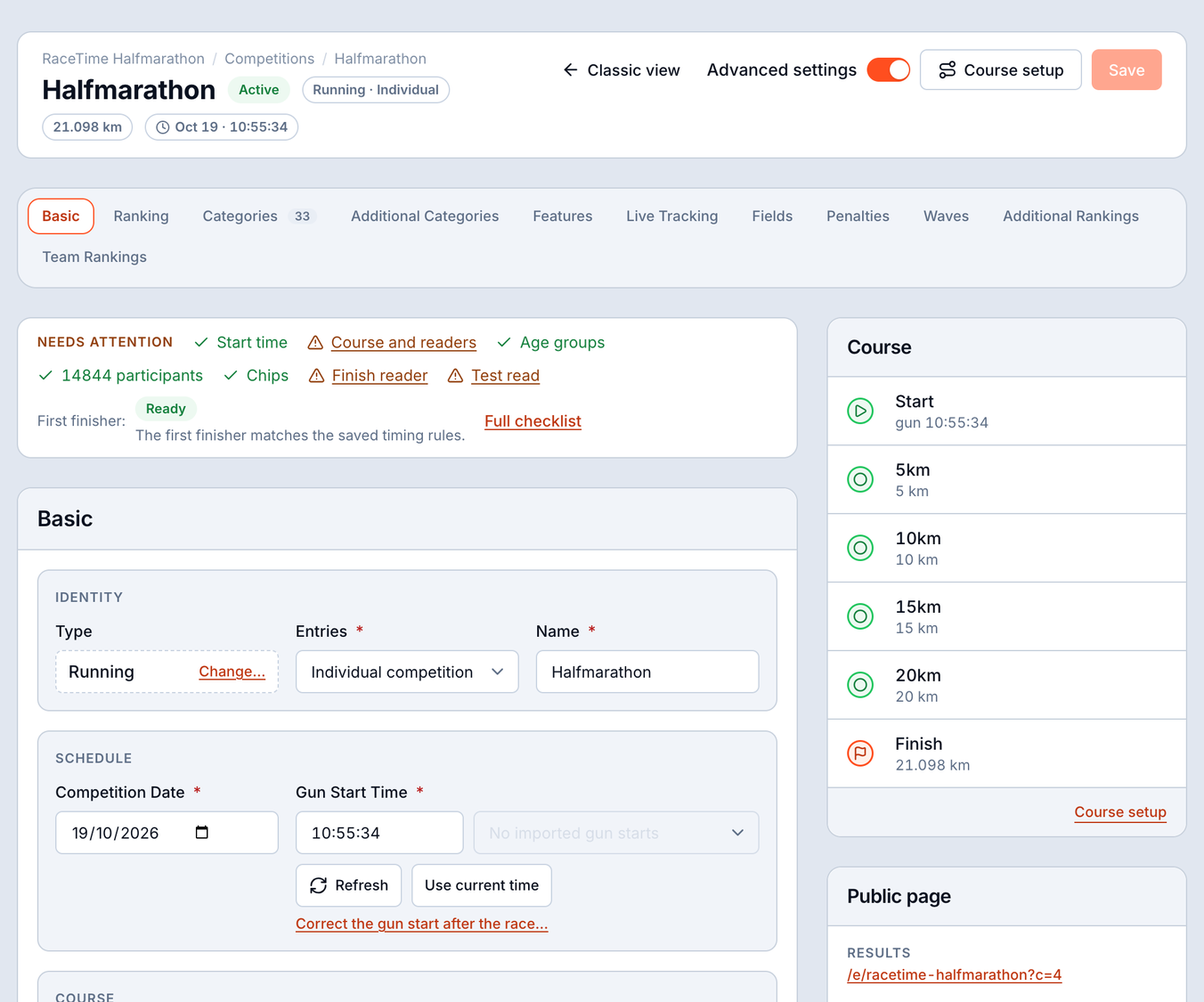
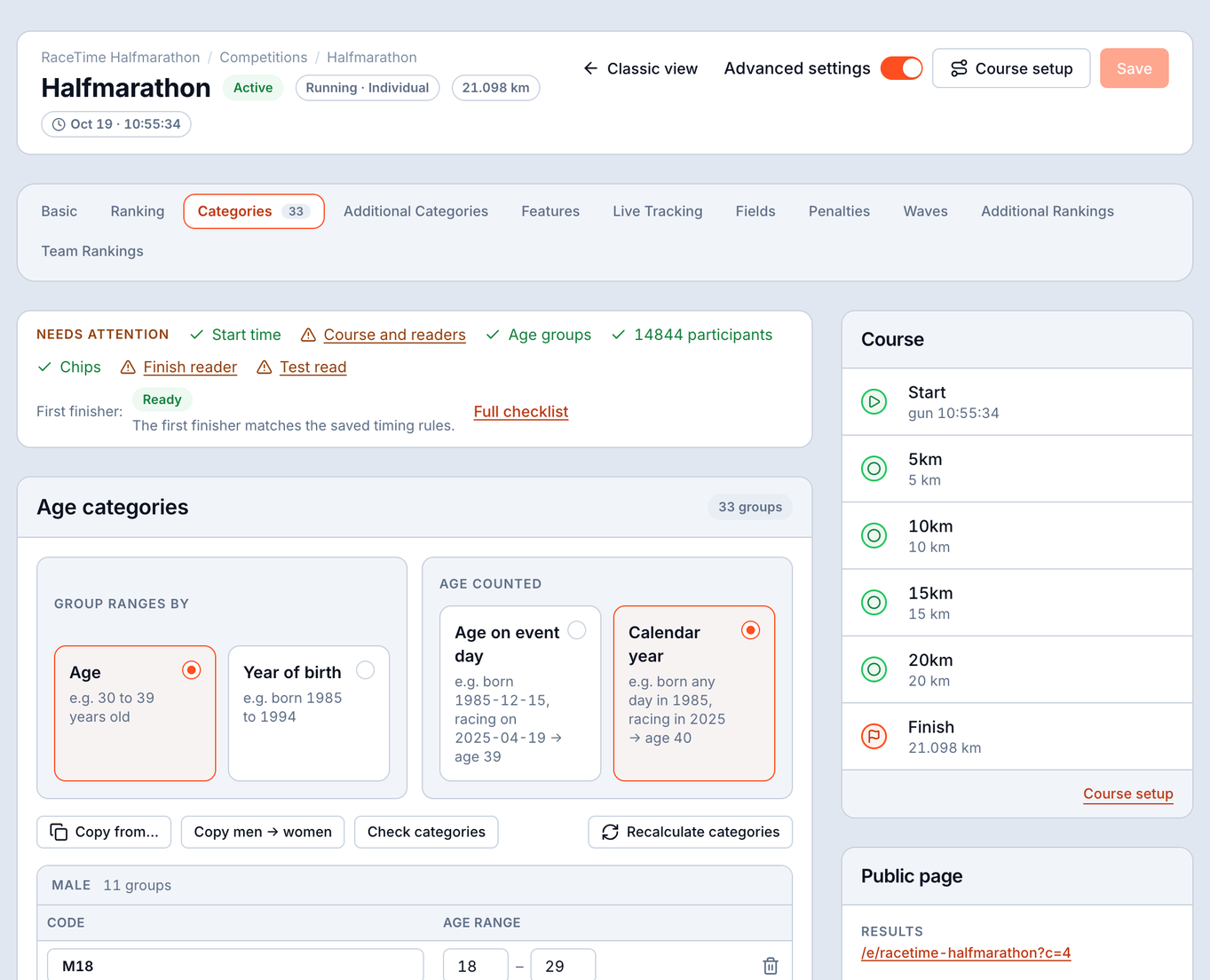
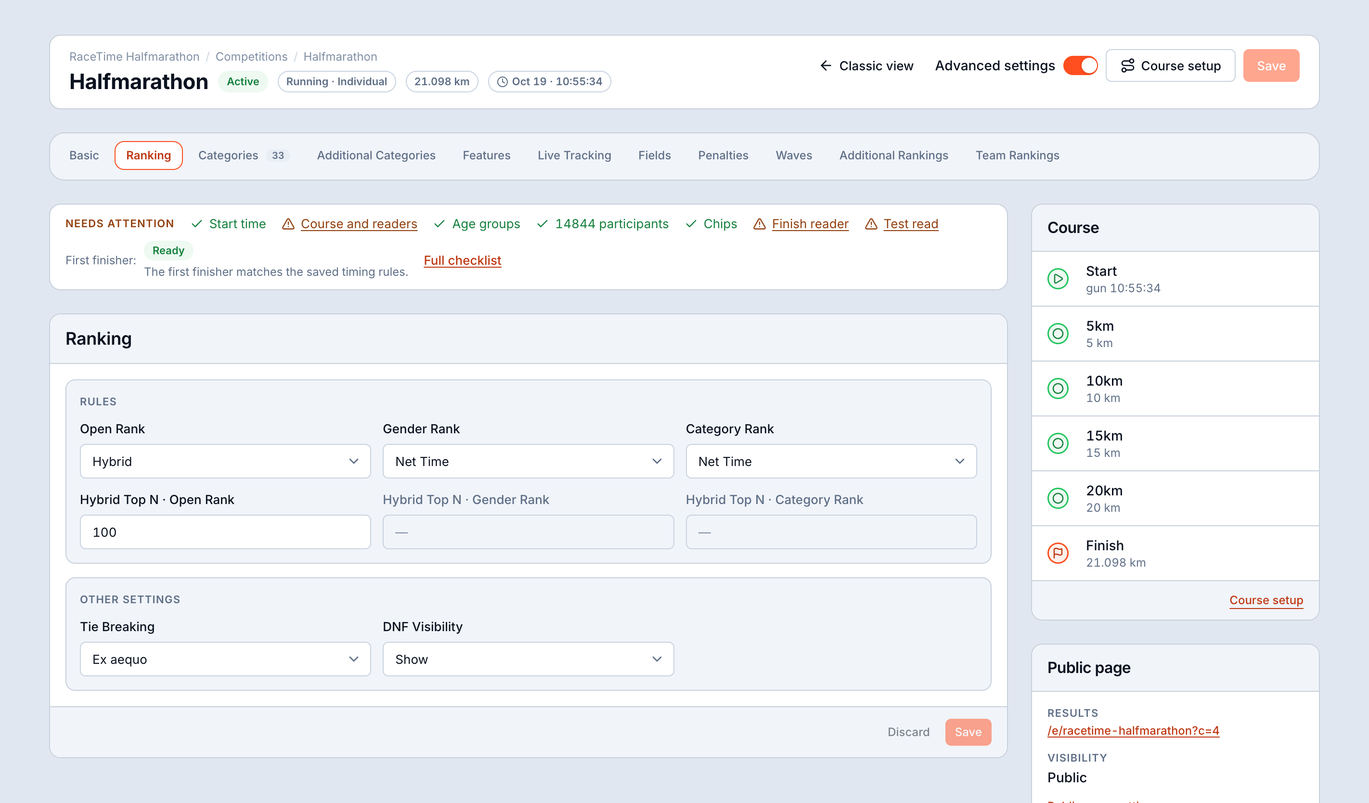
Whatever the format, a competition is built through the same focused wizard - identity and timing, ranking rules, age categories, and race-day features. Each step is its own screen, so the setup stays readable no matter how the event is shaped.